
Cultivating Change: A Career in Regenerative Agriculture at Nestlé Purina
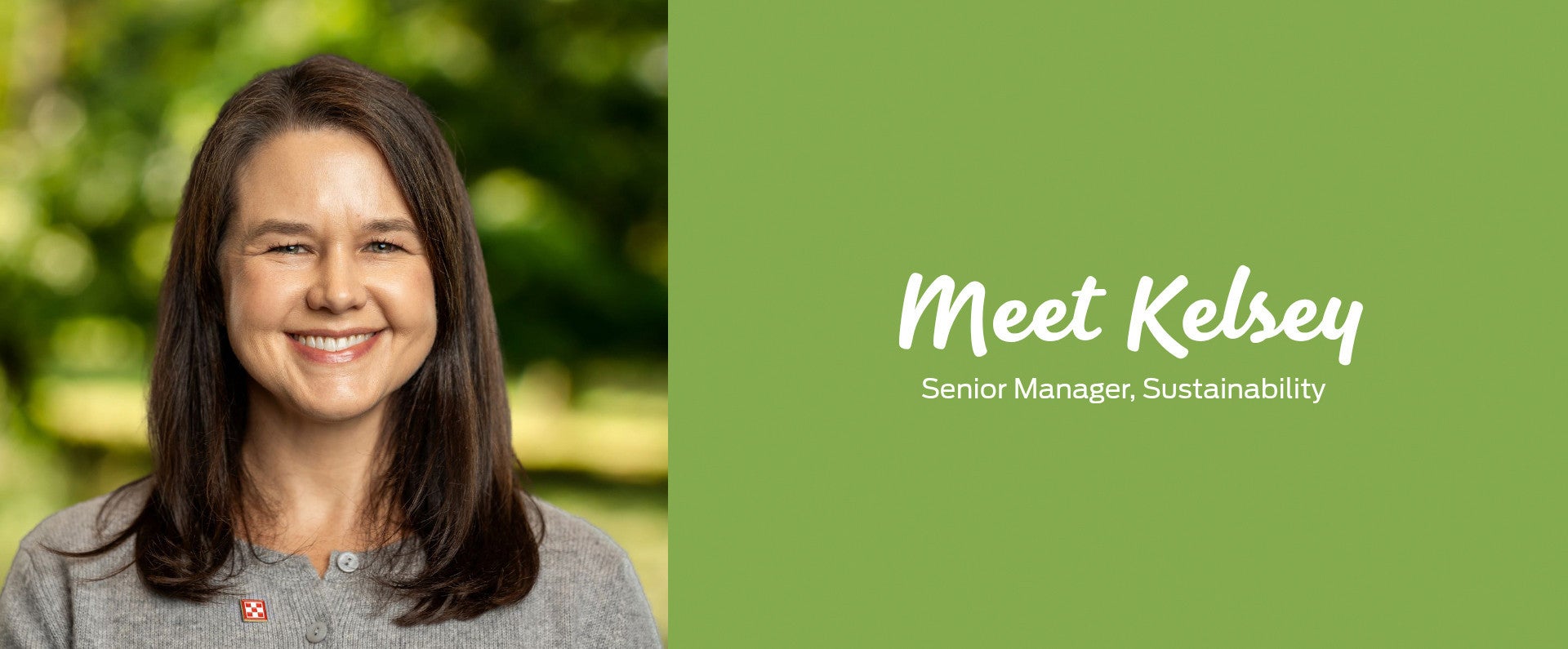
Behind every bowl of pet food is a complex network of ingredients, farmers, and natural resources that help make it possible. Our Sustainability teams are building a more resilient future for pets, people, and the planet through a focus on our supply chain. Read on to learn about Kelsey, and her role in Regenerative Agriculture, to learn how sustainability comes to life across our supply chain, why partnering with farmers is key to long-term success, and what inspires the team to drive meaningful environmental progress every day.
1. Explain your role within Nestlé Purina's Sustainability department
At its core, my work is about working with partners internally and externally to strengthen both the environment and our business over the long term. To do that, I wear several different hats: I lead Regenerative Agriculture for Purina North America along with our broader Climate & Nature work— which spans regenerative agriculture in cereals, grains and soy, as well as water stewardship, biodiversity, and supply chain resilience. A big part of what I do is help accelerate progress here in North America to contribute toward Nestlé's global commitments, such as sourcing 50% of key ingredients through regenerative agriculture by 2030. Our team is all about moving ideas from ambition into action.
2. What is your typical day-to-day like in Regenerative Agriculture?
No two days look quite the same, which is part of what I love. On any given day I might be reviewing a project proposal from a conservation organization collaborating with suppliers and colleagues across the business, working with internal teams on how we communicate about the programs we support, or leading discussions to help move regenerative agriculture projects forward. It's a mix of strategy, partnership-building, and problem-solving, always with an eye toward making our supply chain more resilient.
3. What excites you most about the work that you do?
What excites me most is that this work sits right at the intersection of business resilience and doing right by the planet. Businesses depend on the environment for so much—our ingredients, water, and the natural systems that make our products possible–and I firmly believe that means we have a responsibility to invest back into it. Supporting regenerative practices isn't just the right thing to do; it's essential to ensuring a long-term, reliable supply of the quality ingredients that go into the food pets love. I see my role, in many ways, as an internal advocate. And what makes it especially rewarding is watching this work move beyond intention into real, meaningful progress. Getting to be part of that shift is incredibly energizing.
4. How do you support local farmers to bring regenerative agriculture to life?
Farmers are at the heart of our food system—they know their land better than anyone, so we start by putting them at the center. We partner with suppliers, sustainability experts, and farmer programs to support tailored investments that make regenerative practices both practical and economically viable. On rice farms, for example, that can mean supporting practices like alternate wetting and drying, cover cropping, reduced tillage, and nutrient management – approaches that conserve water, improve soil health, and reduce emissions. We work through these partnerships to bring the right resources and technical support to each region, because the right solution looks different from one place to the next.
5. What surprised you when you began working in this field?
What surprised me most is how many people across the company genuinely want to help. Our associates are eager to lean in and be part of the solution. There's a real appetite across the business to make a bigger impact together, and that shared sense of purpose has been one of the most rewarding surprises.
6. What skills are most valuable for someone interested in a career in sustainability or regenerative agriculture?
I'd point to a few. First, systems thinking – the ability to see how soil, water, biodiversity, farmer livelihoods, and business resilience all connect.
Second, collaboration and the ability to influence without authority, because this work happens across many different teams.
Third, translating complexity into business value – being able to connect environmental outcomes to supply resilience and long-term risk.
And finally, genuine curiosity and a willingness to keep learning, because the science and the landscape are always evolving. A background rooted in environmental studies, science, or agriculture helps, but the mindset matters just as much as the technical knowledge.
Looking to join a company that values sustainability efforts? Be sure to enroll in our talent network to find your best fit with us.